
Drainage first
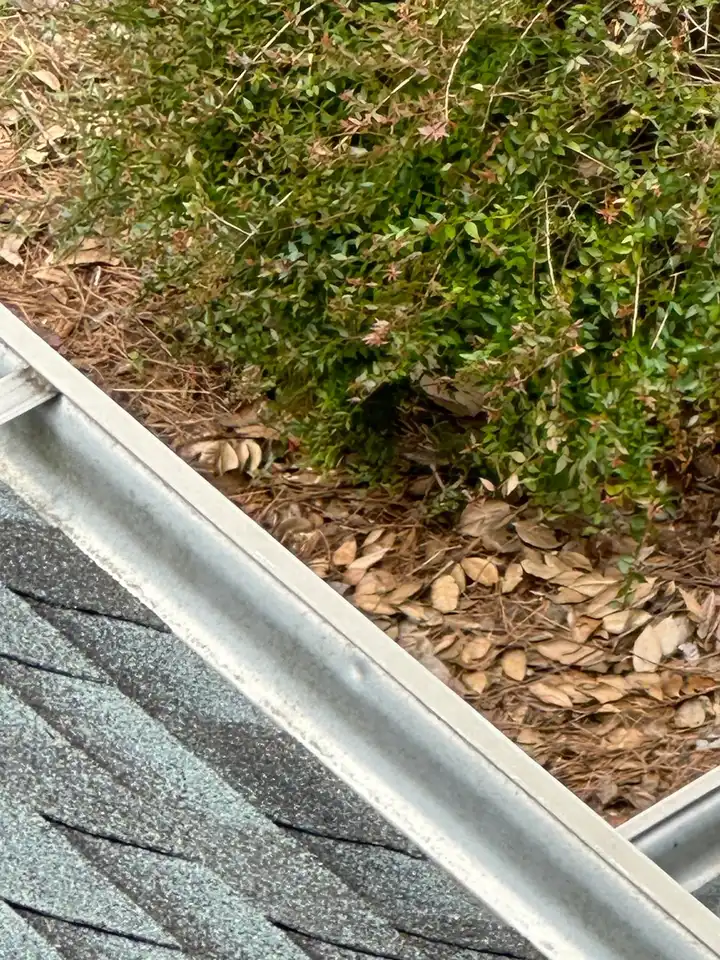
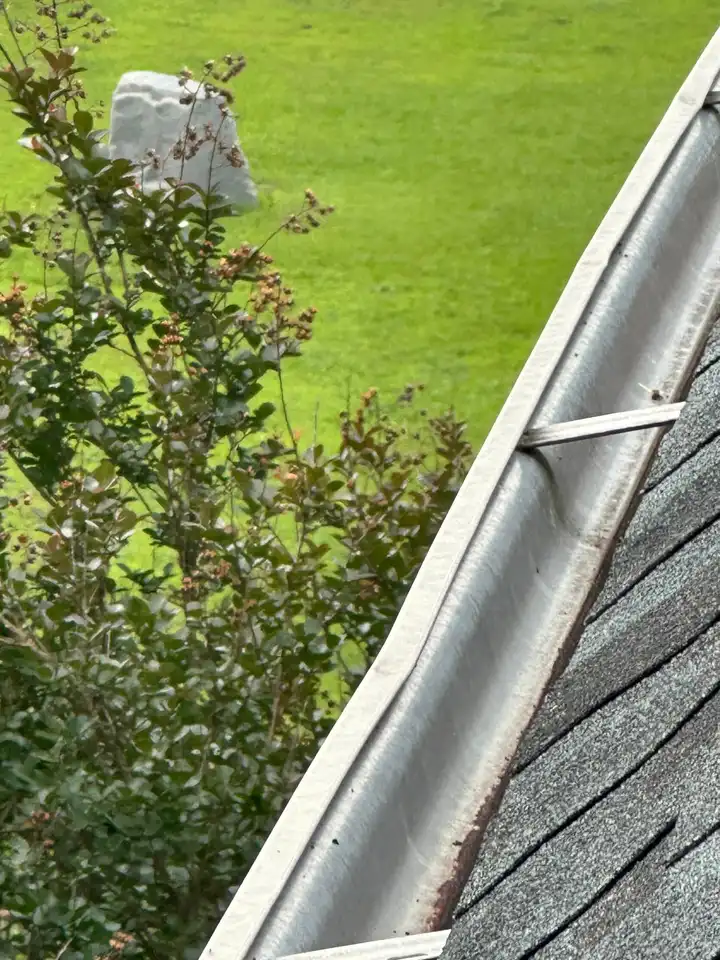
The goal is simple: get water off the roof and away from the house. That takes gutters with enough capacity for the roof area above them, a steady pitch toward the downspouts, enough downspouts in the right places, and discharge that carries water away from the foundation.
Signs your gutters need attention
- Overflowing during normal rain, even when clean
- Sagging sections, separated seams, or loose hangers
- Peeling paint, staining, or rot on the fascia behind them
- Dents or damage after a hail storm
- Water pooling or soil washing out near the foundation
Gutter guards
Guards cover the top of the gutter to keep leaves and debris out while letting water in. They’re most useful on homes under or near trees. There are several styles, from screens and mesh to solid covers, and they differ in how well they handle fine debris and heavy rain. We’ll talk through what fits your home and what upkeep to expect — guards reduce cleaning, they don’t end it.
Alongside a roof, or on its own
Gutters and guards can be their own project or an optional line on a roof replacement. Rotted fascia behind failing gutters is best fixed at the same time — see trim, fascia & soffits.